When Grief Has No Funeral: Naming the Losses That Still Shape Us
We’re taught to recognize grief when someone dies. There’s a body. A service. A moment when the world pauses and acknowledges that something has ended. But what happens when the loss doesn’t come with any of that?
There is a quieter kind of grief that often goes unnamed — ambiguous loss. It shows up when a relationship ends without explanation, when someone disappears from your life, when a friendship fades or ruptures and no one ever says, this is over. The person is still alive, but the relationship you knew no longer exists. And because there’s no ritual, no script, and no social permission to mourn, the grief gets tucked away.
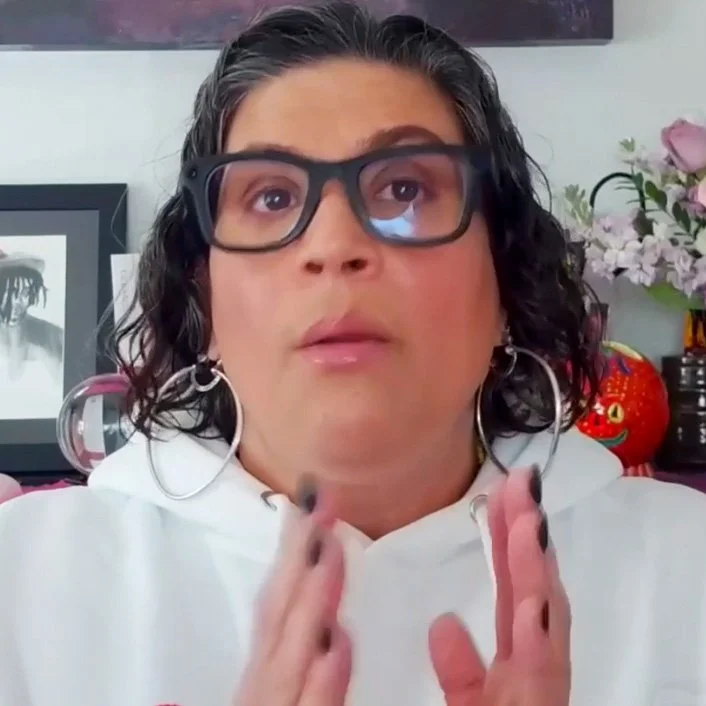
In a recent episode of Two Mothers, One Aché, we explored how destabilizing this kind of loss can be. Not because it’s dramatic, but because it’s unresolved. The nervous system doesn’t know what to do with endings that don’t end. The body stays tethered. The heart keeps waiting.
What makes ambiguous loss especially painful is that it often targets identity. When a relationship disappears without explanation, the first question many of us ask isn’t What happened to them?, it’s What did I do? The grief folds inward. Safety, trust, and self-concept take a hit. You don’t just lose a person; you lose a version of yourself that existed in connection with them.
And yet, these losses are frequently minimized. We’re told to “move on,” “let it go,” or “be grateful it ended.” But unacknowledged grief doesn’t disappear. It relocates. It shows up in the body, in future relationships, in patterns of over-accommodation or hyper-independence. It shows up sideways.
One of the most important shifts in working with ambiguous loss is understanding this: grief doesn’t require closure to deserve care. Waiting for an apology, an explanation, or a mutual conversation can keep healing perpetually out of reach. Closure, in many cases, is something we have to create ourselves.
That’s where ritual, reflection, and boundaries come in. Naming the loss. Writing the story from your perspective. Acknowledging what you lost, not just the person, but the safety, the future, the identity tied to them. And, when necessary, recognizing that some losses are protective. Relief and grief can exist at the same time.
Ambiguous loss asks us to expand our definition of grief. To honor endings that don’t look like endings. To stop ranking pain by whether or not it’s socially legible.
If you’re carrying a relationship loss you’ve never been given permission to grieve, know this: your grief is real. It deserves witnessing. And healing doesn’t begin with forgetting, it begins with telling the truth.